by hungryoga | Sep 2, 2014 | Eating Psychology, Health & Well Being
I love Elephant Journal. I have stumbled upon some wonderful teachers, healers, and have found inspiration that can change a bad day into a good one. Here is an Eating Psychology Coach’s take on Ben Ralston – The three steps to profound healing and how an overeater may relate.
1. Take Responsibility – What’s Your Problem?
“Whatever the problem, it’s your problem. Own it. It’s yours. Not anyone else’s.
Even though you may have thought in the past that it was someone else’s fault.
Even if you wanted it to be someone else’s problem.
It isn’t. It wasn’t.
It’s yours, and yours alone.
Own it.
Face it.”
~ Ben Ralston
As an Overeater your problem may be…
– I like to eat. I like to eat whatever I want. I like sweets.
– I eat when I am alone, stressed, overwhelmed, wanting to escape from the present moment, wanting to feel better than I currently do, when my back hurts, etc.
– I use food as a way to cope, but I overuse it, and it makes me feel worse than if I wouldn’t have done anything.
– I have became afraid of my appetite, and get very anxious around being hungry. Most days I don’t wait until I feel physically hungry. Sometimes the reason is because of ‘food rules’ that I try to follow and instead rebel and do the opposite. Other times it’s being bored and wanting positive stimulation, or being afraid of getting too hungry.
Overeater Excuses have been..
“YOU always fall asleep on the couch which makes me lonely so I eat.”
“YOU want me to be home at night when you are home so I can’t go workout or do something creative, so instead I eat.”
“I have to buy YOU food that I don’t want in the house, so I eat (the bad food).”
But these are all examples of blaming someone else for your overeating instead of taking ownership of it.
You could have chosen:
“I’m going to bed because I feel tired, and I care about YOU enough that you get to come with me.”
“I’m going to go workout because it is what I truly want to do, and when I come home I will be in a better mood for YOU.”
“I am going to buy food for both of us, there is no he or she food, so please don’t judge me if I have a few of OUR terribly good processed granola bars.”
By choosing the latter, you completely take away shame and blame, which are two HUGE contributing factors to overeating.
2. Find the Cause of your Problem.
” To find the cause of the problem, there is a very simple formula. Trace the problem (to use the analogy of a tree) to its roots. The topmost branches of the problem are in the head. The outermost symptoms are in the head (thoughts, beliefs, idea). The trunk of the problem is the heart (emotions). The roots are in the gut (deeper feelings of trauma, stress, fear, etc)… and the cause is a reaction to those deep feelings of trauma. The reaction is a survival instinct.” ~ Ben Ralston
Go DEEP. There are numerous reasons why you may be overeating…
Being single and hating it, hating your job, being confused about your current relationship, hating your body, drinking too much alcohol, being jealous of other women, smoking too much weed, financial burden, family issues, death, postpartum, eating low quality food that makes you crave more, feeling depressed, not achieving something you wanted badly, overworking, overexercising, fear of your purpose, sexually abuse, parenthood, perfectionism, and sooooo much more.
How does being an overeater make you feel?
– It makes me feel really good at first. It gives me time to be by myself, to feel pleasure, release endorphins, be happy. Then I can’t stop, the pleasure turns into pain, the endorphins turn into a deep depression, and I feel very sad for myself.
What would you lose if you healed as an overeater?
– Feeling high, losing a powerful moment, not being able to relieve stress, losing a ritual, having to sit with my loneliness, and no longer having an excuse to fulfill my purpose. “Sometimes, we choose subconsciously to hold on to the benefit, even though consciously we don’t want to.” This is the secondary gain, or the secret benefit derived from the problem.
3. Heal the Cause
Subconscious – of or concerning the part of the mind of which one is not fully aware but which influences one’s actions and feelings: my subconscious fear.
“The cause of the problem is a subconscious blockage. To be specific, the blockage is a subconscious association between safety / survival and an instinct (either fight, flight, or freeze). What belongs there is pure consciousness. When the blockage is removed, pure consciousness flows through the space again naturally, spontaneously and joyfully.” ~ Ben Ralston
– Subconsciously I feel unsafe before I begin to feel hungry, as if I won’t be able to survive unless I eat (which is true, but I’m far from starvation). OR Subconsciously when I’m alone I feel lonely and get anxious because I don’t trust myself around food.
Acknowledge the blockage by becoming completely aware of it.
“So our lives become ruled by subconscious tendencies towards fighting (conquer, destroy, kill, argue, conflict, win, etc); flight (hide, run away, escape, remain passive, etc); and freezing (numbness, paralysis, stiffness, lock-down, tightening up, etc).” ~Ben Ralston
Do not fight yourself by stuffing your face. Do not fly away by trying to escape the moment by overeating. Do not freeze by trying to numb yourself out to the pain. Just be in the moment. Allow yourself to feel anxious. Allow yourself to feel lonely. In that moment lies pure consciousness, where you are completely aware of how you feel and what is happening. Overeating is often fast-paced and unaware. Slow down. Allow yourself to eat and tell yourself it’s okay. Just because you’re not hungry doesn’t mean you don’t have the right to eat. It’s better to eat without guilt and guilt than it is to eat with it. Either way you are still getting to eat, so choose the one that makes you feel better inside.
Thank you so much for taking the time to read this. I hope it has opened up a few eyes and hearts to self-healing. Please comment or share this message to anyone you think it may help. Also, thank you to Ben Ralston for being a leader in the healing world. If you haven’t been to his page yet… it’s time.
Stay Hungry,
Macy
by hungryoga | Aug 25, 2014 | Eating Psychology, Health & Well Being
Would you consider yourself as someone who tends to put others before yourself? (your mother is probably like this too)
Who would have thought that a giving characteristic such as this could be linked to your emotional eating.
In a recent interview at the 2nd Annual Online Eating Psychology Conference, Amy Pershing stated, “…they (binge eaters) tend to put others first, and food may be the only place that they allow themselves to have exactly what they want.”
Paradoxically binge eating is the last thing that this giving soul wants to do. Instead, they have a burning power within them that they really don’t know what to do with. They want to help people and change the world, but know deep down inside they have to help themselves first in order to do so. Unsure of what their true power is, binge eating becomes a substitute for it.
“I’m going to do the opposite of what I want to do. Instead of stepping into my power I’m going to use food.” – An example given by Amy Pershing
So the vicious cycle continues, and shame is built on top of shame, making the toxic dietary belief of, “I have no control. I can’t help anyone because I can’t help myself. I will never overcome this.”
Have you ever considered the way your relationship with self has evolved in your lifetime?
In high school I had a very loving relationship with body and food. I practiced sports for 3 hours, ate three meals, listened to my natural hunger cues, and truly loved my body. Being a collegiate athlete you would think this relationship with self would continue, but it did not. I was constantly challenged with stressful situations that I never had to encounter before. It soon changed my perspective of self, which indeed changed my eating habits.
Anyone who has had a negative relationship with food knows that life cannot be the best that it can be if you are not taking care of your body. What you DO is correlated with who you ARE. When you decide to decrease your own worth and value with negative self talk, judgment, and sabotage, you are allowing the voice that doesn’t want you to succeed to take over.
“The safest place in the world should be in your body, not your distractions. When you begin to feel shameful or unacceptable, then it becomes a lot harder to take the best care of our yourself.” ~ Amy Pershing, 2nd Annual Eating Psychology Conference
We tend to distract our boredom, loneliness, tiredness, or anytime we are in ‘victim mode’ with food or some other vice that gives us immediate relief from our unwanted feelings. What we really need to do is tough it out, sit there, and be with those feelings instead of trying to fill them up to make ourselves feel better. When we overeat we are choosing that as the one and only way to take care of ourselves. Short-term it works, long-term it sucks ass (and gives us a bigger one too). We need to practice patience, long deep breaths, and reflection.
Everyone is struggling, even someone as funny and uplifting as Robin Williams can be dragged down by their own internal demons. Don’t let yourself get that far. Keep being hopeful and positive. Continue to learn more about yourself and the people that inspire you. Don’t be blind by your own shortcomings. Understand where your life force is being used and if that is the way you want it to be used. Reach out for help, thousands of people are waiting for you to tell your story.
Stay Hungry,
Macy
by hungryoga | Feb 20, 2014 | Eating Psychology, Health & Well Being
As my mentor Marc David says, “How we digest and assimilate food is how we digest and assimilate life…”
Do you have digestive issues? Do you get stuck in your head? Come to find out they can be one in the same problem. Digestion can be a very intimate subject, one that can be quietly ignored and the symptoms become “a part of life.”
At the Institute for the Psychology of Eating, “Digestive problems aren’t problems at all. Every digestive symptom or complaint is a message, a whispering, body wisdom, feedback, an opportunity to listen and deepen into our journey.”
How can you help your body be the best that it can be? How can you improve your digestion and actually make it stronger?
As a yoga teacher, I know that an automatic function that we take advantage of throughout our day is our breath. It’s easy to ignore something that happens without having to think about it. Bringing awareness to your breath, creating space by slowing down your inhale and exhale, and noticing the way oxygen makes your body feels is a gift that yoga gives us.
Digestion is another automatic function that we can take for granted. Once you eat food, you are handing the keys over to your body to break down and process foreign substances.
Luckily, by bringing awareness to our breath we will inherently improve our digestion. Relaxation, Breath, Slowing down, Time, Awareness, Body Wisdom, and Rhythm can turn your digestion completely around. These are all part of Mind-Body Nutrition.
In the physiologic relaxation response the breath is rhythmic and deep, and digestion is fully turned on. When we are living in a stressful state, we are moving too quickly, not living in the moment, anxious for the future, don’t have enough time in the day, and ignore our body wisdom.
If you have a sensitive digestion, you are a sensitive person. Start embracing it instead of thinking something is wrong with you. Being sensitive gives you the power to take care of yourself to the highest degree. Don’t be worried if you can’t eat foods that you used to, that’s not a bad thing. Your digestion is actually getting more specific with what it agrees with, and it is constantly learning from its past experiences.
Body wisdom trumps ANY expert, because if something is causing you unwanted symptom, it’s obviously not working for you.
Over 60% of our population has experienced indigestion and upset stomach. The time and age that we are living in isn’t one that is supportive of improving digestion. We are constantly stressed, overworked, and using extra food as a substitute for self-care because we aren’t taking the time to nourish and pleasure our bodies.
A toxic belief that I have learned is our society’s obsession with hard abs. We condition ourselves to believe that if we have a hard stomach, that means we are “tough and have guts, are worthy, put the time in,” and if your belly is soft you are “weak, can’t handle yourself, and are lazy.” I believe we are truly searching for our inner being, our core, that place where we feel aligned with our world and what’s happening in it. A person can be physically strong in the core, but lack their emotional core, and vice versa. Once again, slowing down and noticing the way we feel in our body, the way we are holding ourselves, and how awake we are to the present moment, may be what our obsession around the midsection is really longing for.
So if you have problems with your digestion, take a deeper look into your unwanted symptoms. What are they truly trying to tell you? How can you evolve as a person?
Maybe you need to take a few extra minutes at meal times, eat higher quality of foods, change your eating rhythm, breath deeply, or relax.
I hope you found this article helpful. If you have any questions, please comment below or email me at macymig@gmail.com
Much Love,
Macy

by hungryoga | Jan 17, 2014 | Eating Psychology, Health & Well Being, Lifestyle Design
Something you may or may not know about me is that I studied abroad in Italy for a semester in Business School, and it was one of the most rewarding experiences of my life. I was immersed into the Italian culture, stayed on course to graduate college in four years, met new friends from all over the world, and grew more than I could have ever imagined.
This recent article from Huffington Post, “7 Things Americans Can Learn From Italians”couldn’t be more on point with what I experienced while living in Paderno del Grappa, Italy. Reflecting on my journey, there is so much symbolism between the path I was on as a student in the CIMBA program, and the path I am on now as an Eating Psychology Coach IT. It is a prime example of how new life experiences make you grow as an individual, and allow you to find what you are truly passionate about.
So here is my Eating Psychology Breakdown of Huffington Posts’ “7 Things Americans Can Learn From Italians”.
I have heard numerous times, “Why are Americans so fat, and Europeans not?” They eat more cheese and bread. They drink wine daily. They definitely don’t workout as much as “we” do. So what’s their secret?
1. “Eat slowly, locally and with others.”
Italians are not trying to “Live in the Fast Lane” as so many American feel obligated to do. Americans work through their lunch hour, take a bite of food, and begin typing ruthlessly again to meet their deadline. We believe that ‘time is money’, and that’s the most important thing. We forget to take care of ourselves, and feel like work should come before our well-being.
One of the most important things to improve your metabolism and your overall relationship with food is to eat slowly. What’s more memorable, gathering your friends together at The Melting Pot (a recent three hour experience of mine that will never be forgotten), or shoveling pizza down in front of the TV by yourself? I mean really… the eating experience can be so powerful! Like anything with such energy, it can be extremely empowering or terribly heartbreaking.

2. Drink a little bit, but not too much.
I’m going to be vulnerable here, I drink too much.
Growing up in Western Kansas, it’s part of OUR culture to let loose, real loose. That includes binge-drinking, “country cruising”, lake partying, eating our 4th meal, and passing out god knows where. Haha, judge all you want, but I still wouldn’t change it for the world. My best memories were those times, well, the bits and pieces that I do remember.
Thankfully, I have grown quite a bit, and though sometimes I do drink more than I should still, I have seen significant growth in the this area of my life. It has been tough work, though. I’m learning how to let loose by using my personality, and not an altered mindset.
Italians love their vino. But they don’t overdo it. Here in America, there’s a culture of binge-drinking. In Italy, a bottle of wine is shared among friends or around the dinner table. Stumbling around drunk in Italy is not viewed favorably. (I learned that one the hard way ; ) Italians like to drink, but they know how to keep it classy.
3. You should indulge a little every now and then… perché no??
There are so many delicious treats in Italy — rich gelato, mouth-watering pastries, decadent chocolates. Much like the philosophy on drinking, Italian culture has a “perché no?” take on treats. “Perché no?” translates to “why not?” The idea is to treat yourself by having a little bit of something tasty (because, why not?) but not having so much that you’re gorging yourself. Take Italian gelato shops for example… the normal size of a “coppa” (cup) would look tiny compared to the average size of a cup of ice cream in America.
Yes, yes, yes! Through my Eating Psychology Coaching Program, I have learned how IMPORTANT it is to keep these small pleasures in your life. Don’t deny yourself these wonders because of added sugar or extra calories. These lovely beauts surprisingly will help you feel balanced with no deprivation. The poison comes in the amount, not the actual richness of it. So….. dark chocolate with your next cappuccino? “why not.”
4. Stop hurrying, start relaxing.
Life is less hurried in Italy. People don’t rush around with to-go cups of coffee, but rather sip their espresso at the “bar” (aka coffee shop). Meals tend to linger, whether they be at restaurants or at home. Pedestrians tend to meander. There’s significantly less emphasis put on being on time — rather, the emphasis falls on how that time is spent. Many Italians take a siesta of sorts — a break during the day, from 1 p.m. – 3 p.m., to eat lunch and relax.
There is a way to actually slow down time, within the same amount of time. For example, being late running around the house in the morning for five minutes will feel a lot different than meditating for five minutes. Find simple strategies throughout your day to be MORE productive, by actually slowing down instead of speeding up. Try these for 5 minutes the next time you feel anxious: deep breathing, a walk around the block, stretching, calling a best friend, or mindfully eating an apple.
5. Having family nearby is the best thing ever.
Families in Italy tend to stay in the same area, rather than moving around. Grandparents often care for grandchildren, siblings remain close and extended families are huge and welcoming. While it’s more common in the U.S. to go away for college and settle down somewhere other than where you grew up, it tends to be the opposite in Italy. Having family nearby is deeply valued in Italy. Having nonna(grandma), aunts, uncles and cousins drop by for dinner during the week or having a weekly extended family meal every Sunday is common and brings everyone together.
I recently made the move to Denver, CO, and a big part of that decision was to be close to mi familia in Atwood, KS, a mere 3.5 hours away (including one pee break : ) Before that move, I had a lot up in the air, I could have basically moved anywhere I wanted. With a summer of traveling the West Coast under my belt, the warm coastal climate was hard to turn down. When it came down to it, relaxing into the opportunities that arose and following my heart lead me to Colorado. As my Facebook status said this morning, “Isn’t it a good day when you know you are exactly where you are supposed to be?!” Why yes, yes it is a good day.
6. Gather and spend time outdoors.
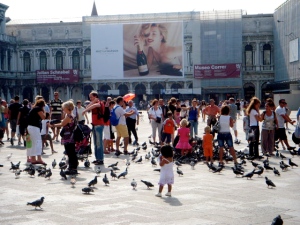
Part of the great communal feel of Italy comes from the fact that people tend to congregate outdoors. Friends will meet up at a piazza and hang out there, rather than in a home. Piazzas are vibrant, outdoor hubs where tons of people gather, children play and tourists roam, creating a lively atmosphere. Similarly, many Italians do most of their shopping at a mercato, outdoor markets where vendors sell everything from food and wine to clothing and leather goods. In America, we have malls — which are great. But there’s nothing like wandering a mercato, sampling the fare and interacting with other locals.
As one of my mentors, Marc David, continuously reminds me, it is SO important to get into nature. It’s easy to be consumed by the city lights, electronics, or the comfort of our own home. There’s a renewed energy when you are outside, breathing the fresh air, watching the wind blow the leaves, and living like the animals we truly are. Ya, I sounds like a thumpa hippy, but hey, take your bike out on a trail and tell me I’m wrong.
7. Maintain a “bella figura.”
Bella figura literally translates to “beautiful figure” — but it’s more idiomatic than that. The idea of maintaining a bella figura is more like the idea of maintaining a good public image. Italians don’t get drunk in public, eat while they walk or wear pajamas to the dinner table because it would have a negative impact on their image. Bella figura is more than just looking good, it’s a way of life that emphasizes aesthetics and good behavior.
This one is great reminder for me personally. I can be caught in workout clothes, no makeup, and hair up on many days of my week. I remember how underdressed I always felt in Italy, and couldn’t imagine dressing up everyday as the Italians do. When it comes down to it, how do you want to take care of yourself? How will you express yourself today? If you’ve been feeling frumpy lately, take an extra 10 minutes in your morning routine to take care of yourself, and feel the difference.
I hope you enjoyed this post, if you Italian, American, or somewhere in between, we can all learn something from each other. Being open to new cultures and making your own can make you a more rounded person, that will attract many differing individuals.
Happy Friday!
Macy Moo
by hungryoga | Dec 12, 2013 | Eating Psychology, Health & Well Being
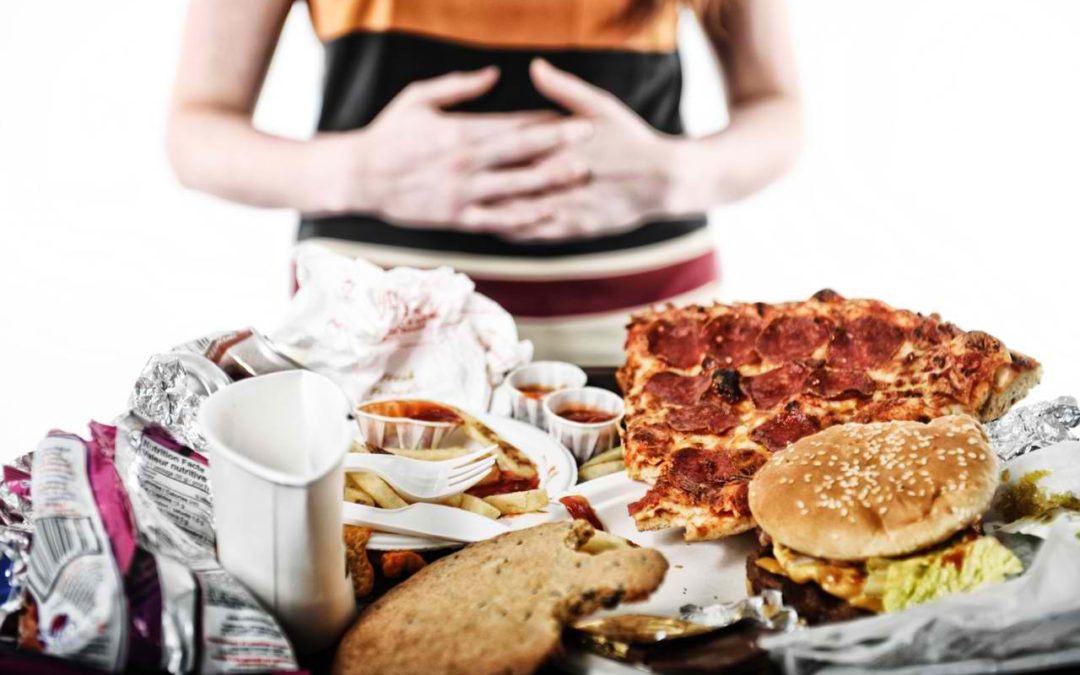
How many times have you caught yourself wanting to eat when you know you are not physically hungry? Instead you are bored, irritable, happy, or just wanting an escape from life for a bit. The environment you are in, such as your couch, the grocery store, or a social event full of goodies, can also be a trigger to eat when you don’t necessarily need or want to.
Luckily, you have the self-awareness that you are NOT hungry, which is more important than actually deciding if you are going to eat or not. In your mind you ask yourself, “Am I even hungry right now?” Here are three answers that you can choose from depending on your mood, environment, situation, etc.
Choice One
Eat Anyway- Yes, this is a decision that is okay, as long as we practice it not being anxiety driven. If you are stressed about deciding to “eat anyway”, then you are likely to move into the behavior of overeating, binge eating, or being unconscious around your behaviors. We want to avoid negative self-talk such as, “Why did I just eat that? I hate myself now. I’m worthless. I have no willpower.”
If you are relaxed around the decision to “eat anyway”, you are making a conscious effort to eat other than hunger. Food isn’t here just to merely help us survive. That’s why it also gives us pleasure, contentment, and aids us through many situations in life. Choose to use food as a medicine rather than a poison, no matter if you are physically hungry or not.
Choice Two
Distract Yourself- This is a great option if you are feeling uncontrollable, confused, anxious, stressed, and you don’t trust yourself enough to make the right decisions around food. Your environment may also be affecting your inner emotions in a large way (break room at work, alone in your kitchen at night). Distract Yourself by completely taking yourself out of the current situation. Go to a different room, go out for a quick walk, change your activity, take a 10 minute cruise in your car, whatever it takes to make you not feel overwhelmed and begin relaxing. One of my personal favorites is calling a friend on the phone. It’s a great way to catch up, and let them know that you are thinking of them (If you are super close, talk to them about what’s really going on.) That small window of distraction will likely change your stress physiology, and allow you to return to the experience with a new perspective.
Choice Three
Take care of the underlying need- Easier said than done, taking care of the underlying need allows us to find peace with food, our body, and strengthens us within. We all deserve to live a balanced life, but in order to do so we have to truly understand our needs and desires. By experimenting with Choice One and Choice Two, we can begin to see patterns of eating and connect the reasons why they worked in some situations and not in others. Once we have more awareness around our physical hunger, the doorway to fulfilling our needs opens to so many other realms: taking a bath, going for a walk, getting out in nature, laughing, giving and receiving hugs, taking a break, etc. Mindfulness gives us the opportunity to find out what we really need, and makes us feel good about our decision. If you suffer from emotional or overeating, it’s crucial to healing that you find strategies that decrease stress and implement relaxation in your mind-body connection.
I hope The 3 Choices will help you when, ‘You are NOT hungry, but still want to eat’.
Live well,
Macy